The hospitality industry has spent decades accepting a basic premise: if you want to serve high-quality hot food, you need a traditional commercial kitchen.
That assumption is beginning to change.
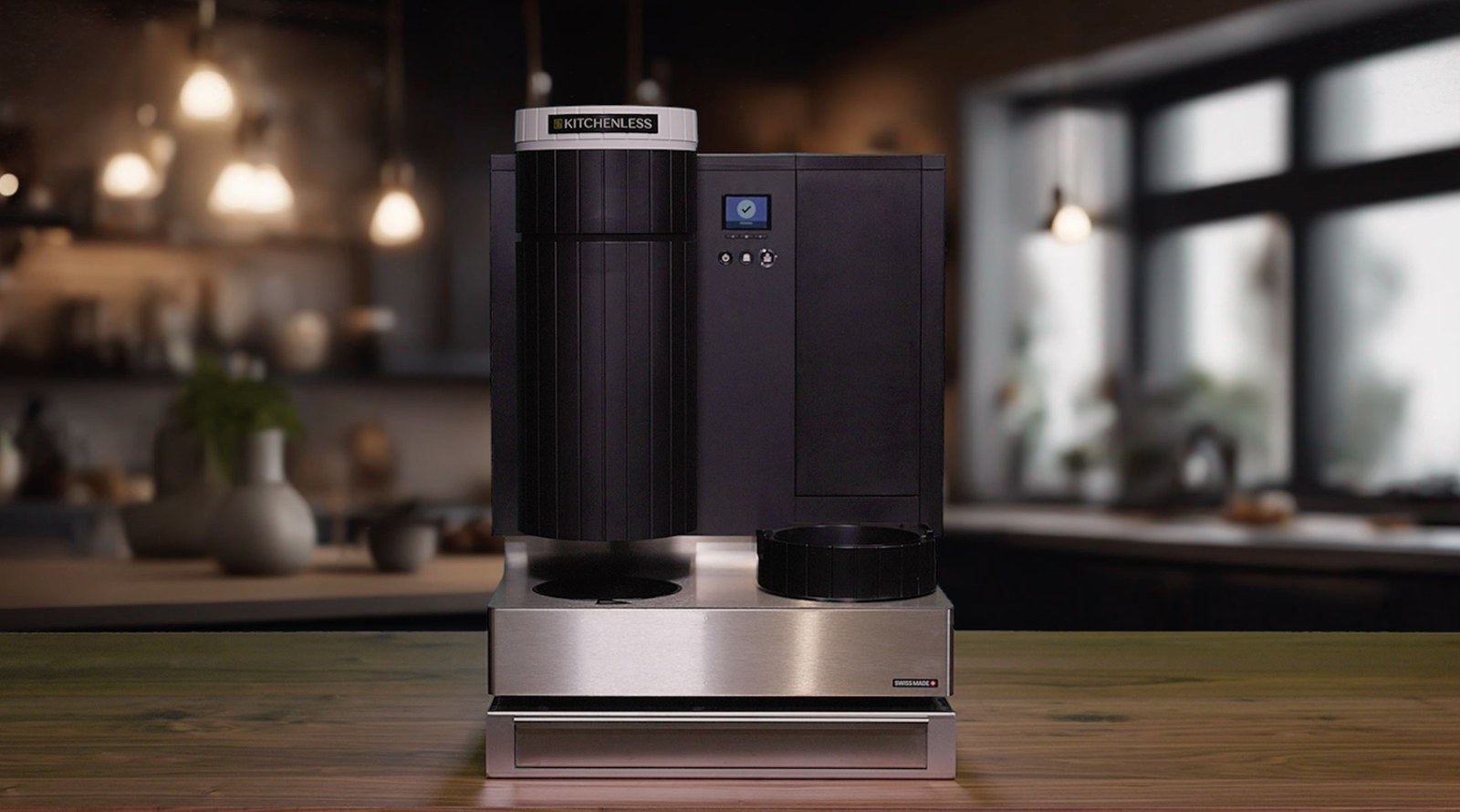
Kitchenless, a foodservice technology company, is introducing a model designed to allow hotels and other hospitality operators to deliver chef-curated meals quickly without the labor, equipment, footprint and operating complexity of a conventional kitchen.
For hospitality leaders, the bigger story isn't simply a new piece of equipment.
It's what happens when we reconsider the entire operating model.
The Traditional Kitchen Is Expensive
Foodservice can add tremendous value to the guest experience, but traditional kitchens bring significant fixed and variable costs:
- Skilled culinary labor
- Recruiting and training
- Large equipment packages
- Hood and ventilation systems
- Utility consumption
- Kitchen build-out and maintenance
- Food waste
- Inventory complexity
- Inconsistent execution across locations
- Limited operating hours when labor isn't available
For hotels, entertainment venues, healthcare, senior living, colleges and other hospitality environments, those costs can make foodservice difficult to operate profitably—especially during lower-volume dayparts.
That's what makes the Kitchenless concept interesting.
A Different Operating Model
Kitchenless describes its technology as essentially a “Nespresso for food.”
Meals are prepared in certified production facilities and delivered to the operation. Using a proprietary steam-based cooking system and QR-coded preparation instructions, individual dishes can be prepared in approximately one minute.
The Hotel Business profile of Kitchenless highlights several potential advantages:
- Minimal kitchen infrastructure
- Reduced dependency on skilled culinary labor
- Fast preparation
- Greater consistency
- Reduced food waste
- Smaller operating footprint
- Expanded foodservice hours
- Broad menu flexibility
- Lower barriers to introducing foodservice into new locations
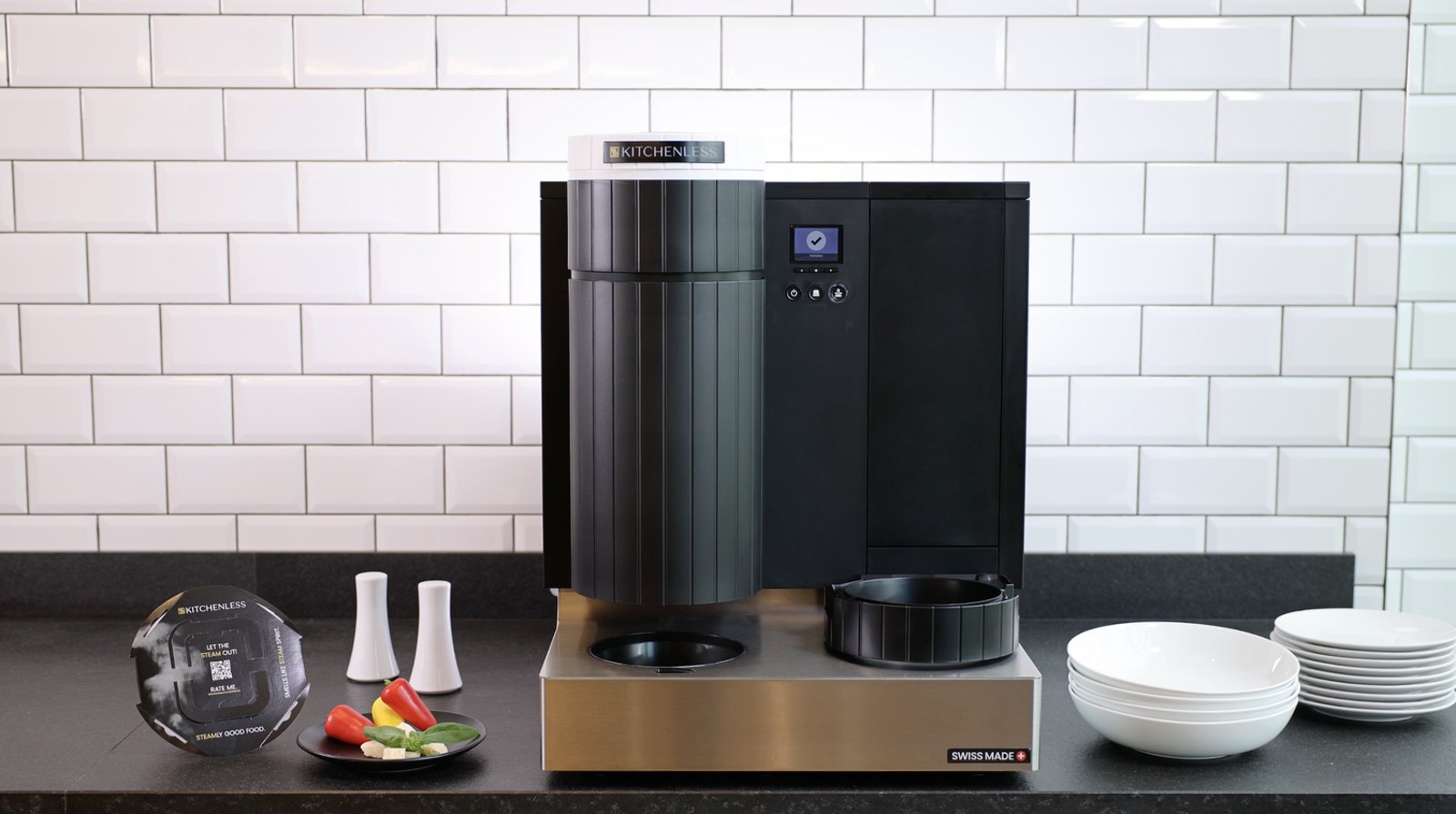


The company also says its model can allow hotels to offer food around the clock without maintaining a traditional full-time kitchen team.


Why This Matters Beyond Hotels
At Catalyst Hospitality Group, we believe innovations like Kitchenless should be examined through a much larger lens.
The question isn't simply: “Can this replace a hotel kitchen?”
The better question is: “Where can this operating model create an entirely new economic opportunity?”
Hotels
Properties that historically couldn't justify a full kitchen may be able to introduce a legitimate food-and-beverage offering.
Limited-service hotels could potentially expand into dinner, late-night dining or room-service-style offerings without building a traditional culinary infrastructure.
Entertainment & Sports Venues
Lower-volume areas of stadiums, arenas and entertainment venues could potentially offer broader food choices without duplicating full kitchen infrastructure throughout the facility.
Colleges & Universities
Residence halls, libraries, student centers and late-night locations could extend dining availability while reducing the labor required to keep traditional venues operating during low-volume periods.
Senior Living
Operators could potentially create additional dining touchpoints and extended meal availability without duplicating kitchens throughout a community.
Corporate & Workplace Dining
Smaller offices and satellite locations that cannot economically support a traditional café could potentially introduce fresh hot meals with a significantly smaller footprint.
Healthcare
Hospitals and healthcare environments may find applications in overnight dining, satellite locations and areas where traditional foodservice infrastructure is difficult to justify.
The Real Opportunity: Changing the Unit Economics
Hospitality companies frequently focus on increasing revenue.
But sustainable growth also requires challenging the cost structure required to produce that revenue.
That's where innovations such as Kitchenless become strategically important.
If an operator can reduce labor, capital investment, waste, footprint and operating complexity while maintaining or improving quality, consistency, availability and the guest experience, the economics of the entire foodservice operation begin to change.
Kitchenless told Hotel Business that its system can generate net profit margins of up to 35% per dish based on suggested retail pricing. Individual operators would, of course, need to validate their own economics based on food costs, pricing, volume, logistics and operating requirements.
But the larger opportunity deserves attention.
Technology Should Solve an Operating Problem
At Catalyst, we don't believe technology should be implemented simply because it is innovative.
Innovation has to solve a problem. The questions hospitality leaders should be asking include:
- Does it improve the guest experience?
- Does it improve food quality or consistency?
- Does it reduce labor dependency?
- Does it lower capital requirements?
- Does it reduce waste?
- Does it create additional operating hours?
- Does it make previously unprofitable locations viable?
- Can it scale across multiple locations?
- Does it ultimately improve the economics of the business?
When the answer to several of those questions is yes, innovation moves from being interesting to being strategically relevant.
The Future May Not Be Kitchenless Everywhere
Traditional kitchens aren't disappearing.
There will always be hospitality environments where culinary craftsmanship, exhibition cooking, high-volume production and made-to-order preparation are essential to the experience.
But the future of hospitality foodservice doesn't have to be an either/or decision.
The strongest operating model may ultimately combine traditional kitchens, centralized production, technology and alternative service models.
The objective should never be to protect the way foodservice has historically operated. The objective should be to design the best operating model for the guest, the associate and the economics of the business.
That's the opportunity technologies like Kitchenless create.